




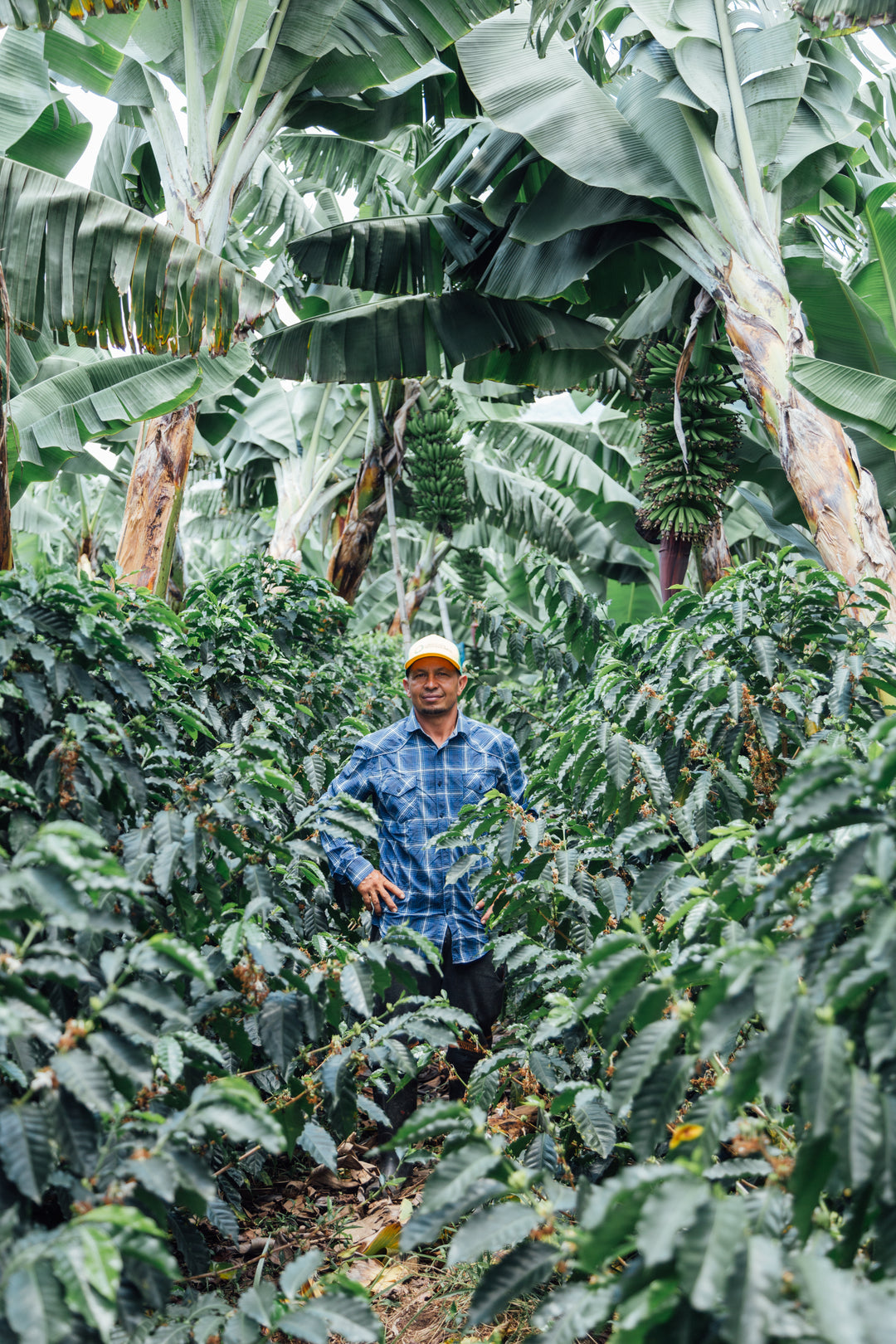


028 - Jhon Didier Trujillo
- Free U.S. shipping
The seventh release of our 2026 season is an Aviary-exclusive separation and marks a triumphant return for Jhon Didier Trujillo to Aviary's lineup with a washed Chiroso that is the result of a years-long collaboration between Jhon Didier, Unblended and Christopher Feran, presenting with a dense, bright, structured cup with notes of mango, passionfruit, lime and peach.
From Christopher: "During Aviary's inaugural season in 2024, we featured the first export and first harvest from a producer in Urrao named Jhon Didier Trujillo. As part of Aviary's efforts to purchase from many of the same producers year-over-year when possible, I reached out Unblended ahead of the of the 2025 season, requesting a set of separations from Jhon Didier. By purchasing from coffee producers every season, we use our purchasing to help create economic stability for producers—not only incentivizing quality and reinvestment in their production, but enabling them to cover the ever-increasing costs of operating a coffee farm in 2026, driven higher and higher still by the U.S. aggression in Iran, Russian aggression in Ukraine and the aftermath of Covid's shipping disruptions.
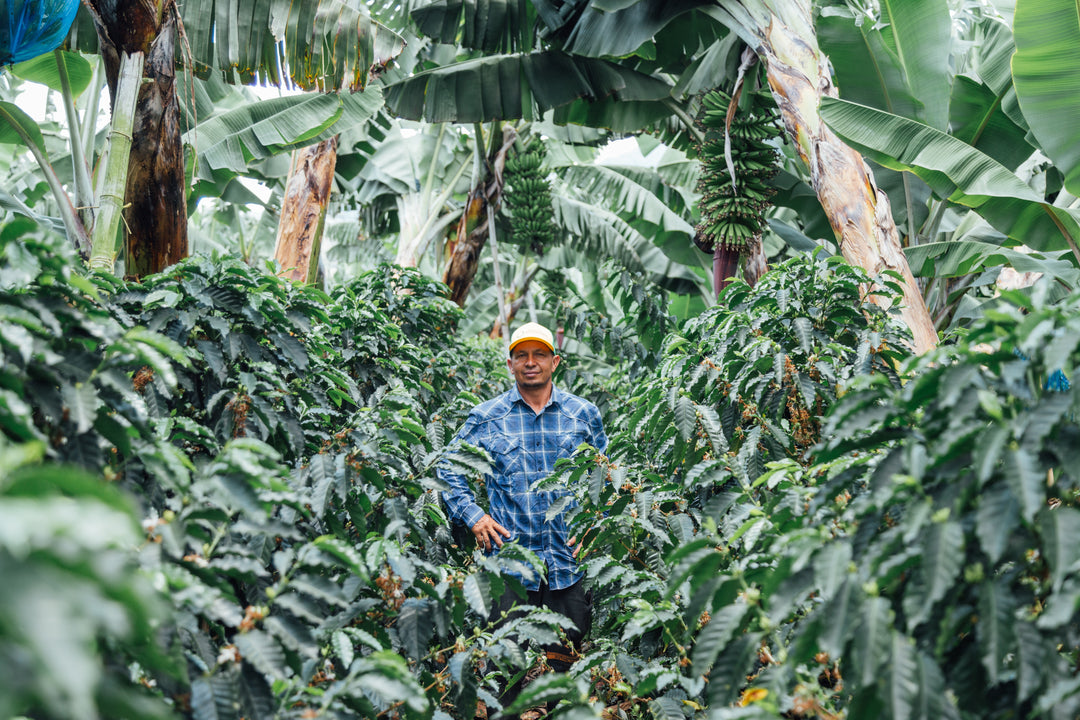
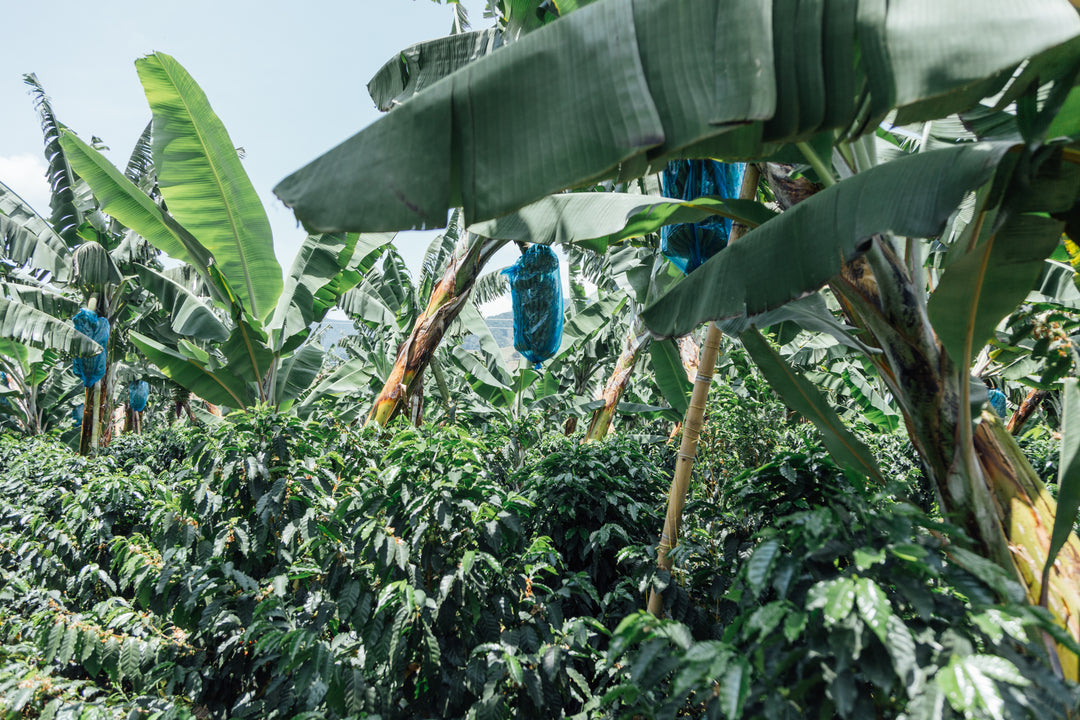
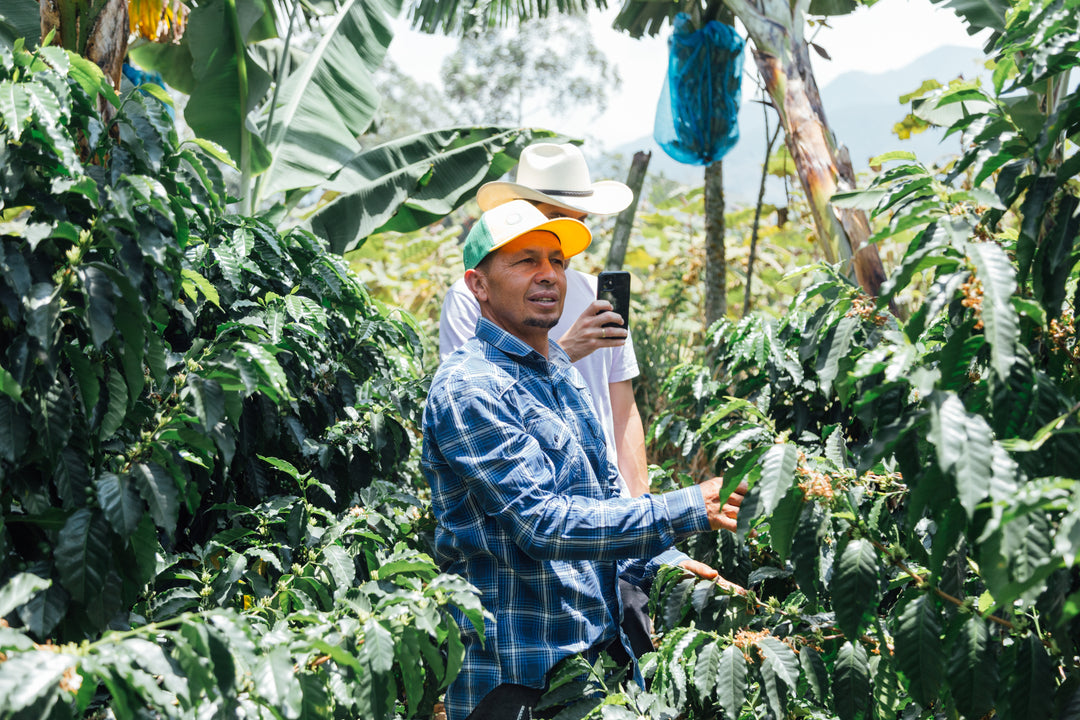
"In the best case, it takes a coffee tree three years to produce; typically, though, it can take anywhere from 4-5 years for a tree to reach full production. This means that for someone looking to begin growing coffee, it's an investment—one with an uncertain outcome. When he decided to begin growing coffee, he planted what he called Caturra Chiroso using seeds he got from Carmen Montoya, whose father got seedlings from Fabian Castrillon, who brought the trees to Urrao from Sonson. Genetic testing performed using a separation of two different varieties called "Chiroso" in a collaboration between Unblended and Sey revealed the coffee's true genetic origins as a likely Ethiopian landrace—origins that explain the coffee's high quality potential. Seeking a high price for his coffee, knowing that quality was important, and hearing that Chiroso from Urrao has become well-known among specialty buyers, Jhon planted exclusively Chiroso on his farm—5,000 trees under the shade of lulo and banana trees.
"When the samples from Jhon Didier's second harvest arrived, I was surprised to discover that the majority contained a specific defect known as phenol—a cup taint which tastes like iodine and overwhelms any sweetness or fruit character. Unfortunately, as a result, I wasn't able to purchase any coffee from Jhon Didier for Aviary's 2025 season.
"As I've written about in the past, phenol is complicated, coming from many causes and often difficult to predict. Its most common causes, though, are found in hygiene and sanitation—usually old coffee stuck to pulping or fermentation equipment—as well as drying coffee in too-humid and too-hot conditions that promote fungal growth. But I saw potential in Jhon Didier's coffee and sent Lucas from Unblended a message on Whatsapp. I wanted to launch a project with a primary goal of reducing phenol in Jhon Didier's production and a secondary goal of optimizing the fermentation protocol to highlight the quality potential of the Chiroso he grows—then, using our work together as a test case, elevate the quality of the sixty-or-so Chiroso producers with whom Unblended works in Urrao.
"Over 18 months, we examined, reworked or rebuilt every part of Jhon Didier's post-harvest processing—from fermentation to drying—through a series of experiments and training camps. In parallel, Lucas and the Unblended team expanded their own capacity for lot separation and granularity in sample collection, dry milling and export in support of this work. Jhon Didier's son, Juan Camilo, joined the Unblended team as a cupper and quickly closed the feedback loop with his father, enabling rapid iteration and scaling of processing experiments and contextualization of his coffees with those from other producers in Urrao—himself quickly becoming an accomplished coffee producer and process engineer.
"In the end, through our collective efforts, we were successful: the lots produced by Jhon Didier during his harvest in late 2025 were free of phenol, consistently dried well and cupped higher than any other coffees I tasted from Urrao this year.
"This microlot—which Aviary purchased in its entirety—is Jhon Didier's triumph: a dynamic, vibrant, bright cup presenting with tropical, juicy notes of peach, mango, lime, and passionfruit."
This coffee was roasted July 10, 2026.
TASTING NOTES: Peach, mango, passionfruit, and lime
ROAST: Light, to highlight the tropical punch of the coffee and the tanginess of its acidity.
ACIDITY: Tangy, structured and bright acidity
FUNK: I'd call it "pulpy" rather than funky—this one presented for me fruited and bright
FOR FANS OF: High-sweetness, structured coffees that are very clean and have a viscous mouthfeel; smallholders; exotic varieties; first-time exporters
FARMGATE PRICE: 30.000 COP/kg as parchment
FOB PRICE: $5.89/lb
LANDED PRICE: $8.80/lb